Introducing Askiagraphy
The Color Essence of a Photograph
Exploring new artistic practices made possible with diffusion transformers by Karim Joseph Nassar
Photographs: Anis Nassar
Askiagraphy practice published
Dated record · Zenodo (CERN) · 
The idea
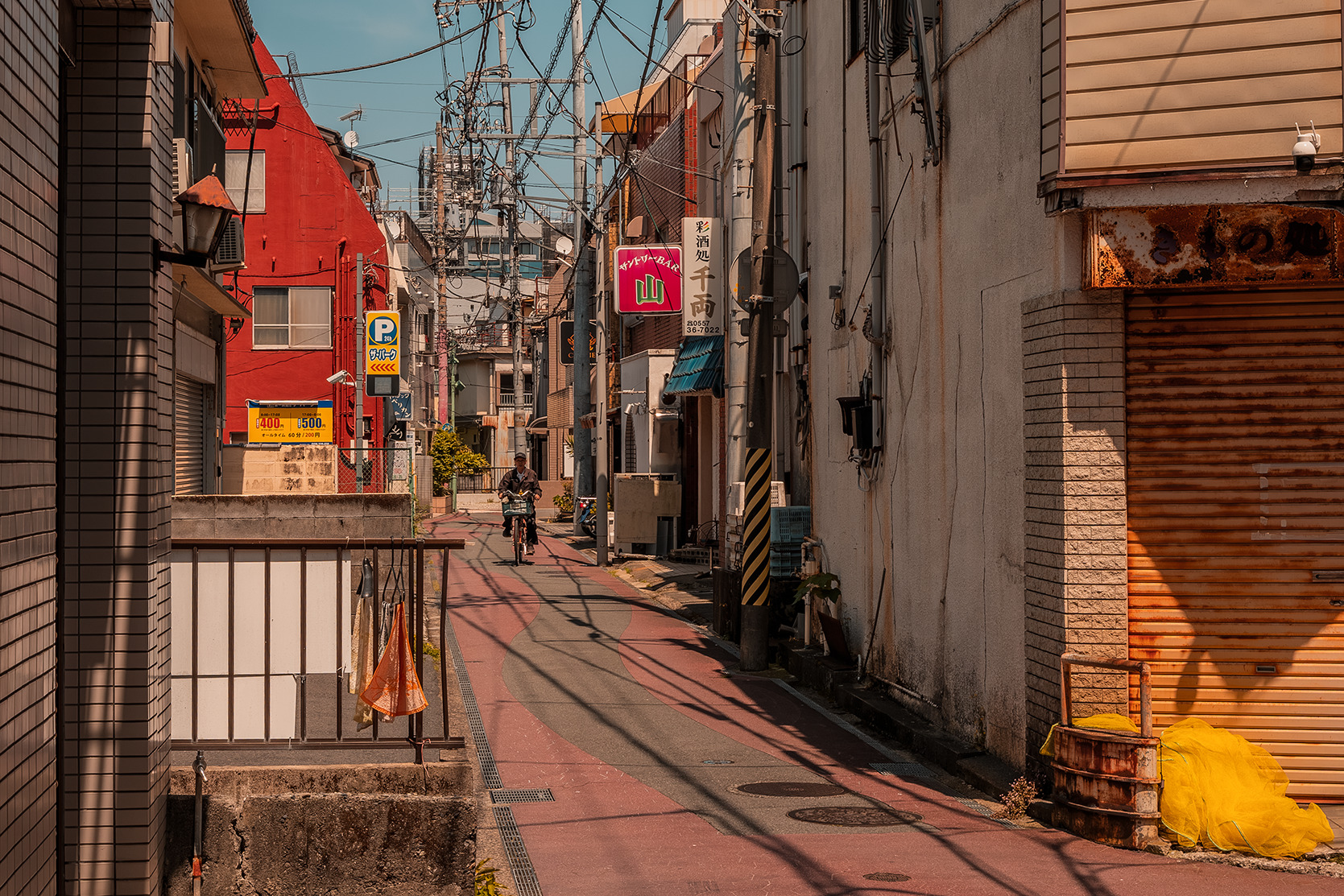
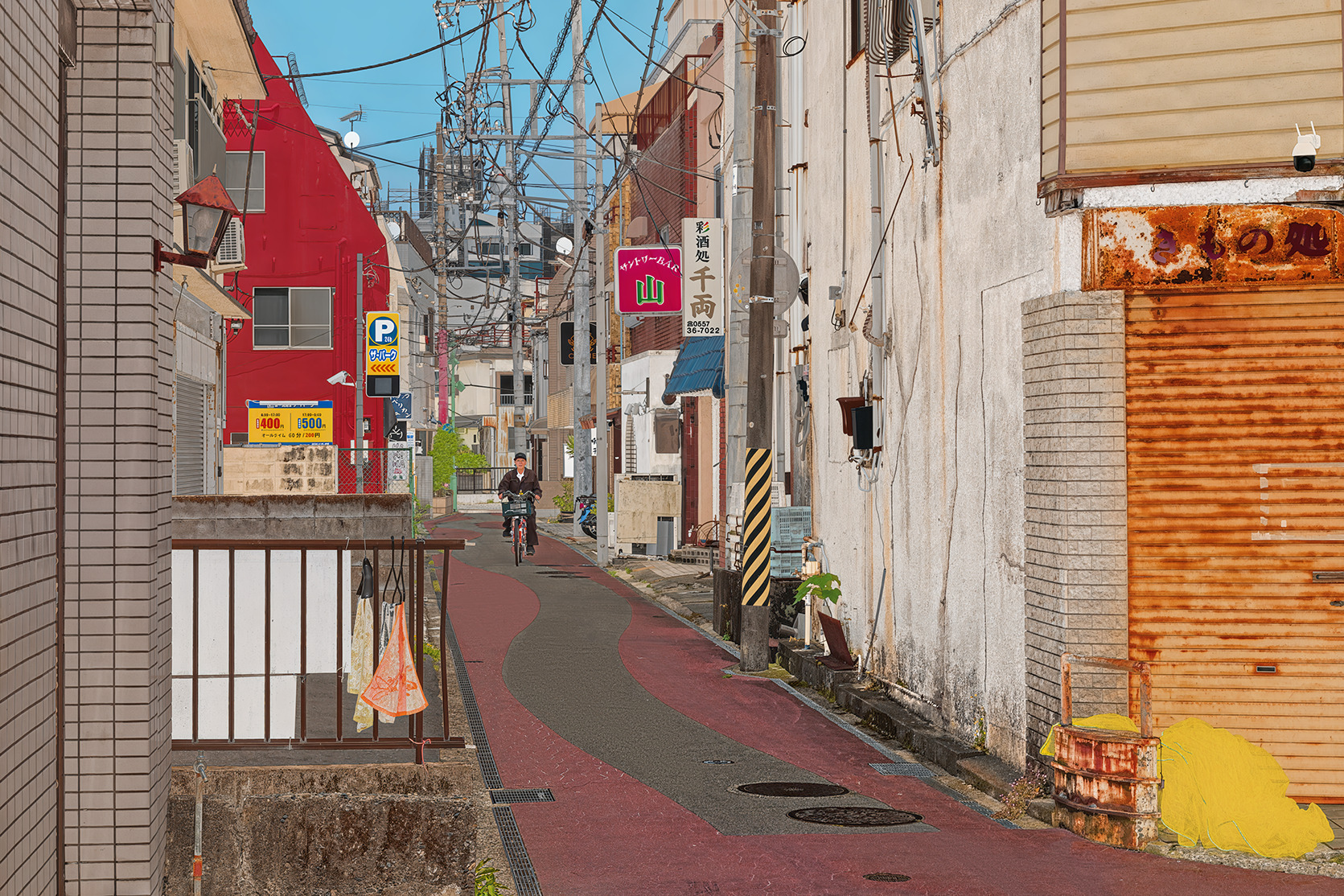
A camera captures everything we see: the light, the colors, the shadows; that has always shaped the way we photograph. The release of Marigold V2, which now breaks a photograph down into separate components with the fine detail needed for high-resolution artworks, inspired me to explore what a photograph becomes when distilled to a single element. With Askiagraphy, that element is color. From the photograph’s data, a diffusion transformer infers the albedo: the base color of each surface, estimated free of lighting and shadow. The result is no longer a photograph in the documentary sense, but a translation of it into its essential colors.
Beyond the technical pass
The albedo inferred from a photograph is a technical pass: it is made to be used inside a post-process, not to be shown. In portrait relighting, the albedo pass is used as an intermediate lighting-free step, to change the lighting on a subject.
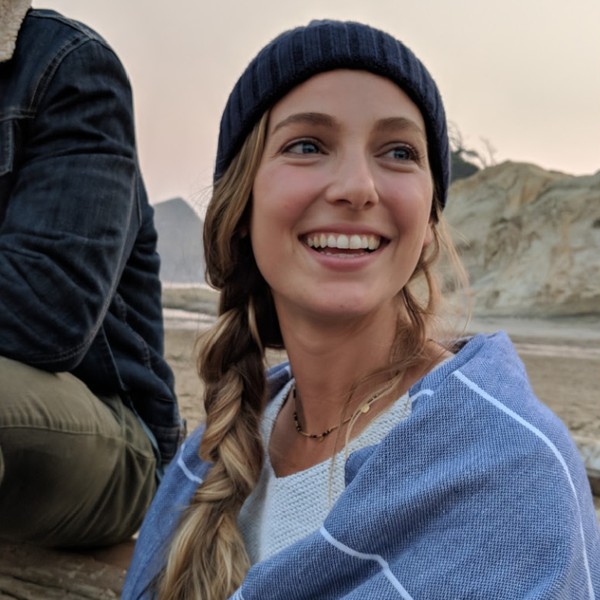
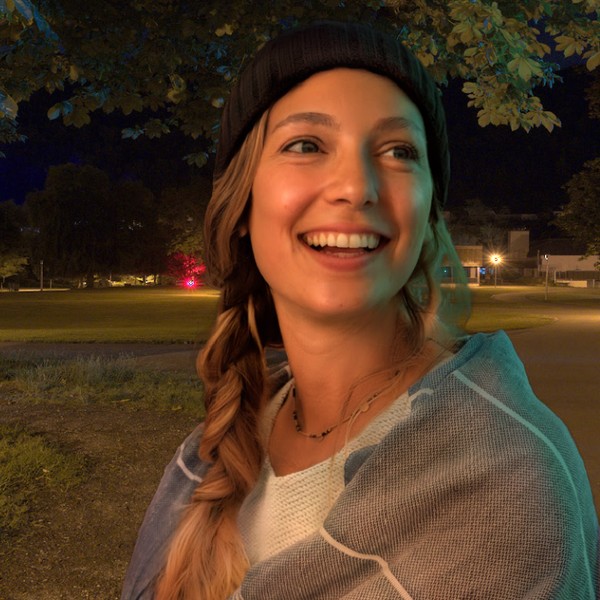
Images from Total Relighting: Learning to Relight Portraits for Background Replacement, Rohit Pandey, Sergio Orts-Escolano, Chloe LeGendre, Christian Haene, Sofien Bouaziz, Christoph Rhemann, Paul Debevec, Sean Fanello, Google, SIGGRAPH 2021.
In the Controllable Light Diffusion for Portraits paper, the researchers judge the albedo pass on a portrait as “not suitable as an end result – too flat […] but the albedo map can be used as a step in portrait relighting systems”. After experimenting with the Marigold V2 model and approaching the albedo pass not as an intermediate step, but as an opportunity to revisit a photograph, I disagree. I find that without the light and shadow that fell on it, a photographed scene held in its pure colors reveals a painterly beauty that can live on its own.
The word
Askiagraphy, from Greek a- (without) + skia (shadow) + -graphy (drawing, writing): drawing without shadow. It inverts skiagraphia, the ancient Greek painting technique of shading to create volume.
- a-without
- skiashadow
- -graphydrawing, writing
The series
Japan Before the Light
Context and novelty
Removing light from a photograph is an intermediate technical step, and what comes out is meant to be used, not shown. In CGI, Adobe’s Substance 3D has a Delight filter that strips the lighting from a photograph, because materials should not include lighting information before being rendered. Google Research’s Total Relighting estimates the albedo of a portrait in order to light it again under a new sky. Photogrammetry pipelines have used de-lighting tools from Unity and Agisoft for years, stripping the baked light out of a scanned texture so that an engine can put its own light back.
In every one of those uses the albedo is a pass made to be lit again. Buried inside a technical process, the beauty of what it reveals has gone unnoticed. Askiagraphy explores it. It elevates the albedo from an intermediate pass to the final artwork: from a single photograph, the scene is held in its essential colors.
Separating a photograph from its lighting with the fine detail needed for high-resolution artworks has only recently become practical, with the release of Marigold V2, opening new creative possibilities. This inspired me to create Askiagraphy and publish it on 1 October 2026. The model’s open Apache 2.0 license makes the approach available to anyone, and I’m excited to see where other artists take it. Thank you to the Marigold team for making this possible.
Credits
- Askiagraphy practice created by
- Karim Joseph Nassar
- Practice statement
- doi.org/10.5281/zenodo.23103541 · Zenodo (CERN)
- Photographs
- Anis Nassar
- Albedo estimation
- Marigold V2 — Igor Pavlovic, Thiemo Wandel, Anton Obukhov, Luca Bartolomei, Andrey Davydov, Fabio Tosi, Matteo Poggi, Sabine Süsstrunk, Dengxin Dai
The model
Marigold V2: Revisiting Diffusion Transformers for Monocular Depth Estimation
ACM Transactions on Graphics (SIGGRAPH Asia 2026)
EPFL · HUAWEI Bayer Lab · University of Bologna
Released under the Apache License 2.0
Free tool
ComfyUI. For the albedo estimation, I started working with Marigold V2 at release, building my own pipeline with an LLM before ComfyUI supported it. It now runs natively in ComfyUI from a ready-made template, with a guide.
Caution for new ComfyUI users: ComfyUI is free and open source, and anyone can publish custom nodes for it. Some have carried malicious code. The guide provided is the official native implementation.
Sibling practice
Vathography: a photograph translated into volume, exploring its underlying geometry, its purest forms.
About
Karim Joseph Nassar, multidisciplinary digital artist based in the canton of Bern, Switzerland.